How the Takin Got Its Funny Face
Genetics & Morphology

How the Takin Got Its Funny Face

Unusual shapes — genetics and morphology.
Genetics & Morphology12-Month Curriculum 12h

The Story

The Great Animal Workshop

Long ago, before the mountains of Sikkim had names, the Great Maker sat in her workshop at the top of Kanchenjunga and made animals. She had been at it for weeks. She had made the snow leopard (sleek and silent), the red panda (fluffy and charming), the yak (enormous and warm), and the musk deer (shy and sweet-smelling).

She was running out of parts.

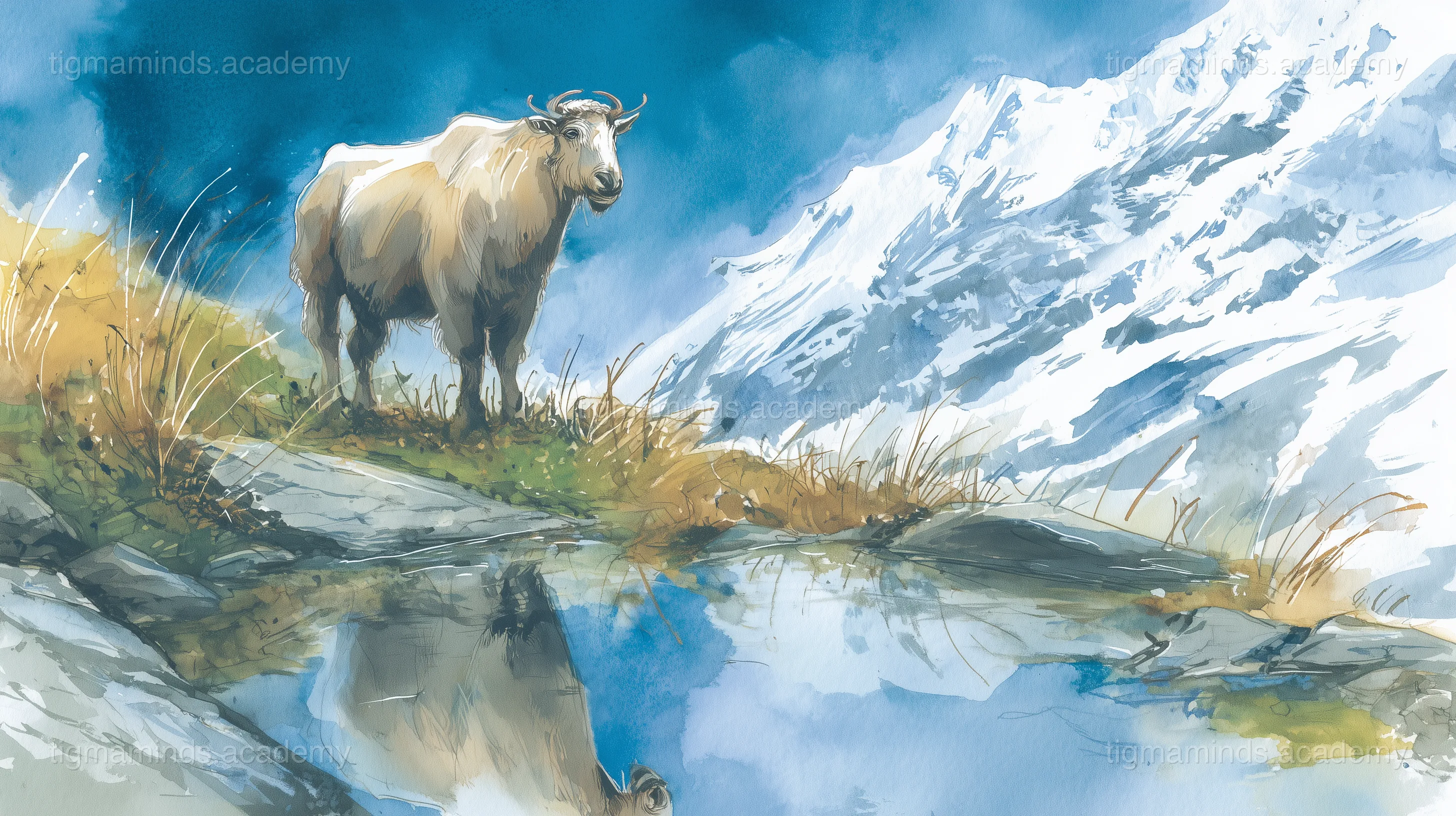
On her workbench lay a pile of leftovers — a cow's body, a goat's legs, a moose's nose, a bear's shoulders, horns that were too small for a buffalo and too big for a goat, and a pair of eyes that looked permanently confused.

"Well," said the Great Maker, brushing sawdust from her hands. "Let's see what we can do with these."

Assembly Required

She took the cow's thick body and attached the goat's sturdy legs. "Hmm. Top-heavy," she muttered, and added the bear's enormous shoulders to balance things out. Now it was even more top-heavy, but at least it looked strong.

She stuck on the moose's wide, flat nose. It didn't quite fit, so she squished it a bit, giving the creature a face that looked like it had walked into a door.

"The horns," she said, picking them up. They curved backward in an odd way — not majestic like a buffalo's, not elegant like a deer's, just... unusual. She placed them on top of the head, where they sat like two mismatched question marks.

Finally, she popped in the confused eyes. The creature blinked at her.

"What am I?" it asked.

"Good question," said the Great Maker.

The Name Problem

The Great Maker consulted her list. Every good animal name was taken. Lion, tiger, elephant, eagle — all gone. She needed something new.

"You look a bit like a cow," she said.

"I'm not a cow," said the creature, offended.

"A goat?"

"Certainly not."

"A gnu?"

"A what?"

"Never mind. I'll call you takin."

"Takin," repeated the creature, trying it out. "Takin, takin, takin. Not bad. But what do I do?"

The Great Maker thought about it. The snow leopard hunted. The yak carried loads. The red panda looked adorable. Every animal had a role. What was the takin's?

"You," said the Great Maker slowly, "will live in the highest bamboo forests, where the clouds are so thick you can chew them. You will eat bamboo and wild herbs. You will travel in herds. And you will be the most unique animal in the mountains."

"Unique how?" asked the takin.

"Unique in that no one will ever look at you and think of another animal. You are completely, entirely, wonderfully yourself."

The Other Animals React

When the takin walked down from Kanchenjunga and into the forests of Sikkim, the other animals stared.

"What is that?" whispered the red panda.

"It looks like a cow that got dressed in the dark," said the snow leopard.

"Is it a goat or a bear?" asked the musk deer.

The takin heard all of this. At first, it felt embarrassed. It tried to walk like a cow. It tried to climb like a goat. It tried to look fierce like a bear. Nothing worked. It just looked like a takin trying to be something else, which was even funnier.

Then an old Himalayan tahr — a mountain goat with more wisdom than teeth — said something that changed everything.

"Why are you trying to look like us? We all look like something. You look like nothing else on earth. Do you know how rare that is?"

The Takin's Pride

The takin stopped trying to be anything other than a takin. It walked with its odd, rolling gait. It stared at the world through its permanently confused eyes. It wore its mismatched horns like a crown.

And a strange thing happened: the other animals began to admire it. Not because it was graceful or beautiful or fierce, but because it was completely itself in a world where everyone else was trying to be something they weren't.

The snow leopard wished it could stop hiding. The red panda wished it could stop posing. The musk deer wished it could stop running. But the takin? The takin just stood in the bamboo mist, chewing leaves and looking confused and being, without any effort at all, the most memorable animal in the Himalayas.

To this day, if you trek through the high forests of Sikkim and spot a takin through the mist, you will laugh. You can't help it. It is the funniest-looking animal you have ever seen. But look again, and you will see something else: an animal that is perfectly, unapologetically, wonderfully unique.

The Great Maker, watching from the top of Kanchenjunga, smiled. The takin was her finest work — not despite the leftover parts, but because of them.

The end.

Try It Yourself

Choose your level. Everyone starts with the story — the code gets deeper as you go.

Story Progress

0%

Ready to Start Coding?

Here is a taste of what Level 1 looks like for this lesson:

Level 1: Explorer — Python
import numpy as np
import matplotlib.pyplot as plt

# Your first data analysis with Python
data = [45, 52, 38, 67, 41, 55, 48]  # measurements
mean = np.mean(data)

plt.bar(range(len(data)), data)
plt.axhline(mean, color='red', linestyle='--', label=f'Mean: {mean:.1f}')
plt.xlabel("Sample")
plt.ylabel("Value")
plt.title("Genetics & Morphology — Sample Data")
plt.legend()
plt.show()

This is just the first of 6 coding exercises in Level 1. By Level 4, you will build: Map Facial Feature Variation Across Related Species.

Free

Level 0: Listener

Stories, science concepts, diagrams, quizzes. No coding.

You are here

Enrolled

Levels 1-4

Python, NumPy, Matplotlib, real projects, mentorship.

Sign Up Free

Stay Updated

Join Waitlist

Get notified when enrollment opens for your area.

Notify Me

Level 0 is always free. Coding levels (1-4) are part of our 12-Month Curriculum.