Why the Night Jasmine Blooms After Dark
Circadian Rhythms in Plants

Why the Night Jasmine Blooms After Dark

Plants that tell time — circadian rhythms.
Circadian Rhythms in Plants12-Month Curriculum 12h

The Story

The Garden of Show-Offs

In a garden at the edge of Jorhat, in the heart of upper Assam, every flower tried to outshine the others. The red hibiscus opened wide at dawn, showing off her crimson petals to every passing bee. The marigold blazed orange all day long, demanding attention. The bougainvillea draped herself over the garden wall in cascades of magenta, as if to say, look at me, look at me, LOOK AT ME.

But in one quiet corner of the garden, a small tree with unremarkable leaves stood in silence. She had buds — hundreds of tiny, tight green buds — but she never opened them during the day. Not once.

"What's wrong with you?" asked the hibiscus. "Why don't you bloom?"

"I do bloom," said the tree softly. "Just not when you're watching."

The Shy Flower

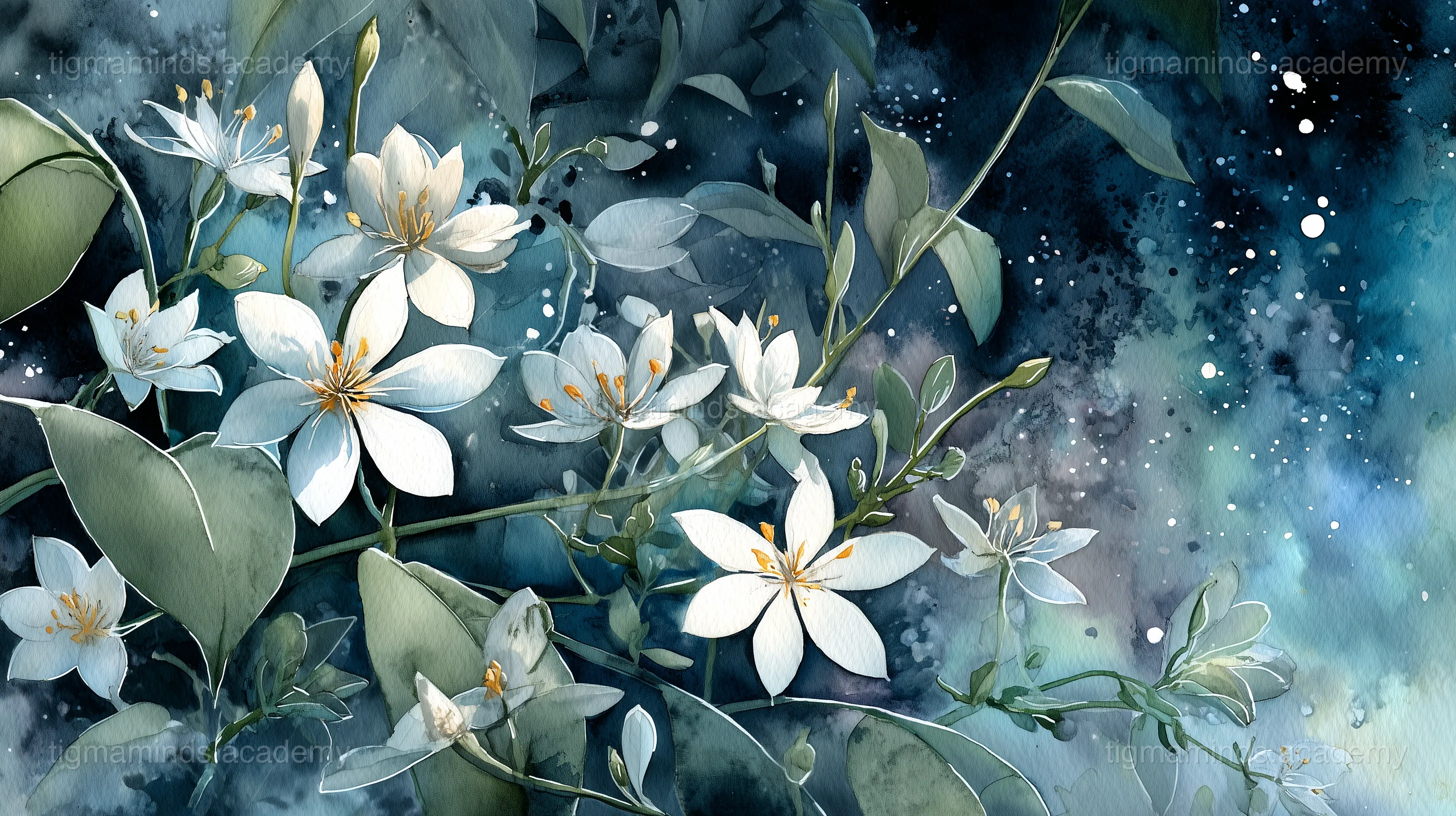
Her name was Seuli — the night jasmine, known among the people of Assam as sewali phool. She was small, white, with a tiny orange stem, and her fragrance was the sweetest in the garden. But Seuli had a problem.

She was shy.

Not shy the way people mean when they say "a little quiet." Shy the way the moon is shy — present always but visible only when the sun steps aside. Seuli couldn't bear to bloom in bright sunlight, with all the other flowers watching and judging. The thought of opening her petals while bees buzzed and butterflies compared colours made her close up tighter than ever.

"If I bloom in the day," she told the old tulsi plant nearby, "everyone will compare me to the hibiscus and the marigold. I'm too small. Too plain. Too white."

"White is not plain," said the tulsi wisely. "White is every colour before it decides what to be."

The First Night

One evening, after the sun set and the hibiscus folded her petals and the marigold dimmed and the bougainvillea stopped posing, the garden fell quiet. The fireflies came out. The moon rose, soft and silver. And in the silence, Seuli opened her buds.

Hundreds of tiny white flowers, each one perfect, each one releasing a fragrance so sweet it stopped the night breeze in its tracks. The scent drifted across the garden, over the wall, through the streets of Jorhat, and into open windows where people sat drinking their evening tea.

"What is that smell?" they said, closing their eyes and breathing deep. "It's the most beautiful thing I've ever smelled."

By morning, Seuli had dropped all her flowers. They lay on the ground like a carpet of white stars, still fragrant, still beautiful. And before the hibiscus woke up, Seuli was already growing new buds for the next night.

The Discovery

Children were the first to understand. They woke early and found the white carpet under the tree. They gathered the tiny flowers in their palms and strung them into garlands. They put them in their hair, in their books, on the prayer shelf. The sewali phool became the flower of Rongali Bihu, of morning prayers, of grandmothers' gardens.

The hibiscus was puzzled. "You bloom at night, when nobody is looking. How are you so loved?"

Seuli smiled — a small, quiet smile. "Maybe because I bloom when nobody is looking. People find me on the ground in the morning, like a gift someone left while they slept. They didn't see me bloom, so they imagine it. And imagined beauty," she said, "is always more magical than beauty that demands to be seen."

The Beloved Flower of Evening

To this day, the night jasmine blooms only after dark. She opens her petals when the garden is quiet, scents the night air while the world sleeps, and drops her flowers before dawn. She never competes. She never shouts. She never demands attention.

And yet she is the most beloved flower in the gardens of Assam — proof that you don't need to be the loudest or the brightest to be treasured. Sometimes, the quietest gifts are the ones people remember longest.

The end.

Try It Yourself

Choose your level. Everyone starts with the story — the code gets deeper as you go.

Story Progress

0%

Ready to Start Coding?

Here is a taste of what Level 1 looks like for this lesson:

Level 1: Explorer — Python
import numpy as np
import matplotlib.pyplot as plt

hours = np.linspace(0, 48, 200)
pfr = np.where(hours % 24 < 14,
    0.9, 0.9 * np.exp(-0.2 * (hours % 24 - 14)))

plt.figure(figsize=(10, 5))
plt.plot(hours, pfr, linewidth=2, color="purple")
plt.axhline(y=0.3, color="red", linestyle="--", label="Flowering threshold")
plt.fill_between(hours, 0, 1, where=(hours % 24 >= 14), alpha=0.1, color="navy", label="Night")
plt.xlabel("Hours")
plt.ylabel("Pfr level")
plt.title("Phytochrome Timer: When Does Night Jasmine Bloom?")
plt.legend()
plt.show()  # When does Pfr cross the threshold?

This is just the first of 6 coding exercises in Level 1. By Level 4, you will build: Investigate How Light Affects Plant Behavior.

Free

Level 0: Listener

Stories, science concepts, diagrams, quizzes. No coding.

You are here

Enrolled

Levels 1-4

Python, NumPy, Matplotlib, real projects, mentorship.

Sign Up Free

Stay Updated

Join Waitlist

Get notified when enrollment opens for your area.

Notify Me

Level 0 is always free. Coding levels (1-4) are part of our 12-Month Curriculum.