Why the Mountains of Haflong Turn Blue
Atmospheric Optics & Rayleigh Scattering

Why the Mountains of Haflong Turn Blue

The blue hills of Dima Hasao — a painter spirit's beautiful accident.
Atmospheric Optics & Rayleigh Scattering12-Month Curriculum 12h

The Story

Why the Mountains of Haflong Turn Blue

The Painter of the Hills

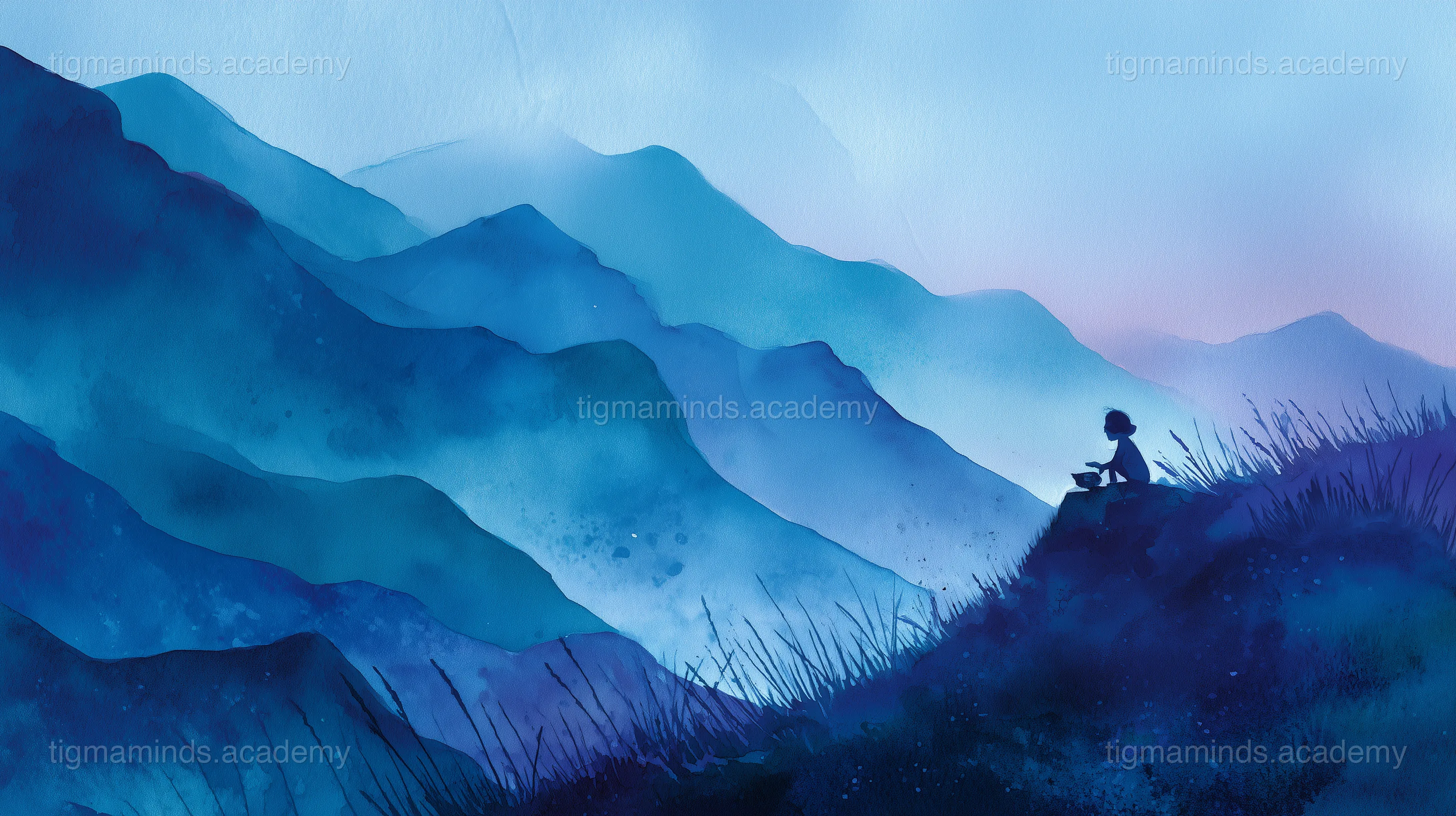
If you have ever visited Haflong — the only hill station in Assam, nestled in the Dima Hasao district — you will have noticed something magical. The mountains there are blue. Not grey, not green, not brown, but a soft, dreamy blue that changes shade with the time of day — pale as a robin's egg at dawn, deep as the sea at dusk.

People call it the Scotland of the East. But the people of the hills have their own explanation for the colour, and it begins with a painter named Hasinao.

The Spirit Who Loved Colour

Long ago, before the hills had any colour at all, they were plain white — like unfinished canvases waiting for paint. The forests were white. The rocks were white. Even the waterfalls were white, though to be fair, waterfalls usually are.

In those days, the hill spirits were tasked with painting the world. Each spirit had a colour. The forest spirit had green. The sunset spirit had orange and red. The river spirit had silver. And Hasinao, the youngest spirit, had blue.

Hasinao loved blue more than anything. She carried her blue paint in an enormous clay pot balanced on her head as she walked through the sky, painting the heavens. Every morning, she mixed a fresh batch — indigo from wild plants, cobalt from mountain minerals, and a secret ingredient: the colour of the distance between two hills, which is the bluest thing in nature.

The Great Spill

One evening, Hasinao was walking across the sky above Dima Hasao, carrying her pot of blue paint to the eastern horizon where tomorrow's sky needed touching up. The hills below were white and bare, waiting for the forest spirit to come and paint them green.

But Hasinao was tired. She had been painting all day — a long, perfect sky from Haflong to the Jatinga Valley — and her arms ached. She stumbled on a cloud. The pot tipped. And blue paint poured down over the hills like a monsoon rain.

It cascaded over ridge after ridge, filling every valley, coating every peak, seeping into the soil and the rocks and the roots of the trees that didn't exist yet. The white hills turned blue — every shade of blue imaginable, from the lightest periwinkle on the hilltops to the deepest navy in the valleys.

"Oh no," said Hasinao, looking down at her masterpiece of a mistake. "Oh no."

The Council of Spirits

The other spirits were furious. The forest spirit arrived to paint the hills green and found them already blue. "How am I supposed to grow green trees on blue hills?" she demanded.

"Paint over it," suggested the sunset spirit.

The forest spirit tried. She painted green over the blue, and the trees grew — but the blue underneath showed through. The leaves looked green up close, but from a distance, the hills still shimmered blue. The blue had soaked too deep into the earth to be covered.

"It's ruined," said the forest spirit.

"Wait," said the oldest spirit, the one who painted shadows. She was very old and very wise and had seen many mistakes turn into marvels. "Look at it from far away."

The spirits flew up high and looked down. The hills of Haflong lay below them like a watercolour painting — blue and green layered together, shifting in the light, more beautiful than either colour alone.

"That," said the shadow spirit, "is the most beautiful accident I have ever seen."

The Blue That Stayed

Hasinao was forgiven. More than forgiven — she was celebrated. The other spirits agreed that the blue hills of Haflong were the most enchanting landscape in all of northeast India. The colour changed with the weather: misty lavender on rainy mornings, bright azure under clear skies, deep indigo under starlight.

Hasinao was so pleased that she made a promise: every evening, she would add a fresh layer of blue to the hills, just a touch, just enough to keep the colour alive. That is why the hills of Haflong are bluest at dusk — that's when Hasinao walks over them, paintbrush in hand, touching up her beautiful mistake.

And that is why, if you visit Haflong and stand on a hilltop at sunset, you will see the mountains turn the deepest, most magical blue you have ever seen. It is not a trick of the light. It is not the distance playing games with your eyes. It is paint — ancient, accidental, and perfect — laid down by a clumsy young spirit who loved the colour blue more than anything in the world.

The end.

Try It Yourself

Choose your level. Everyone starts with the story — the code gets deeper as you go.

Story Progress

0%

Ready to Start Coding?

Here is a taste of what Level 1 looks like for this lesson:

Level 1: Explorer — Python
import numpy as np
import matplotlib.pyplot as plt

# Rayleigh scattering: intensity proportional to 1/wavelength^4
wavelengths = np.linspace(380, 700, 200)  # nm
scattering = 1 / wavelengths**4
scattering = scattering / scattering.max()

# Map wavelength to approximate visible color
colors = plt.cm.rainbow(1 - (wavelengths - 380) / 320)

plt.figure(figsize=(10, 5))
for i in range(len(wavelengths) - 1):
    plt.fill_between(wavelengths[i:i+2], scattering[i:i+2],
                     color=colors[i], alpha=0.8)
plt.xlabel('Wavelength (nm)')
plt.ylabel('Relative Scattering Intensity')
plt.title('Rayleigh Scattering: Why Blue Dominates')
plt.show()  # How steep is this curve?

This is just the first of 6 coding exercises in Level 1. By Level 4, you will build: Build a Scattering Demonstration.

Free

Level 0: Listener

Stories, science concepts, diagrams, quizzes. No coding.

You are here

Enrolled

Levels 1-4

Python, NumPy, Matplotlib, real projects, mentorship.

Sign Up Free

Stay Updated

Join Waitlist

Get notified when enrollment opens for your area.

Notify Me

Level 0 is always free. Coding levels (1-4) are part of our 12-Month Curriculum.