How the Eri Silk Moth Found Peace
Silk Biology & Ethics

How the Eri Silk Moth Found Peace

Non-violent silk — biology meets ethics.
Silk Biology & Ethics12-Month Curriculum 12h

The Story

The Cocoon's Fear

Deep in a castor plant in a village near Sualkuchi, a tiny caterpillar named Erima was eating her way through a big green leaf. She ate and ate, growing fat and sleepy, until the day came when her body told her it was time to spin.

"I'm afraid," Erima told her mother, who was resting on a nearby branch — a pale, soft-winged moth with feathery antennae.

"Afraid of what?" asked her mother.

"I've heard stories," said Erima. "About the other silkworms — the mulberry ones. They spin their cocoons, and then the weavers boil them alive to get the thread. What if the same thing happens to me?"

Her mother wrapped a dusty wing around her. "We are eri silkworms, little one. Our story is different."

The Weaver's Promise

Erima's mother told her about a promise made long ago — so long ago that even the oldest moths only remembered it as a feeling, not a fact.

"Once, the people of Assam and the eri moths made an agreement. The people said: We will take your silk, but we will not take your life. They would wait for us to finish our transformation, wait for us to chew our way out of the cocoon, and only then would they collect the empty shell and spin it into thread."

"But doesn't the thread break when we chew through it?" asked Erima.

"Yes," said her mother. "The thread is shorter, and it must be spun by hand, not reeled. It takes more work. But that is the price of peace silk — a little more effort in exchange for a life."

The Spinning

Erima began to spin. She pulled the soft, white thread from her body and wove it around herself in layer after layer, creating a cocoon that was warm and snug and perfectly dark inside. It took her three days.

Inside the cocoon, something extraordinary happened. Erima dissolved — not all at once, but slowly, cell by cell — and rebuilt herself into something new. Wings formed where legs had been. Antennae unfurled where eyes had been. She became a moth.

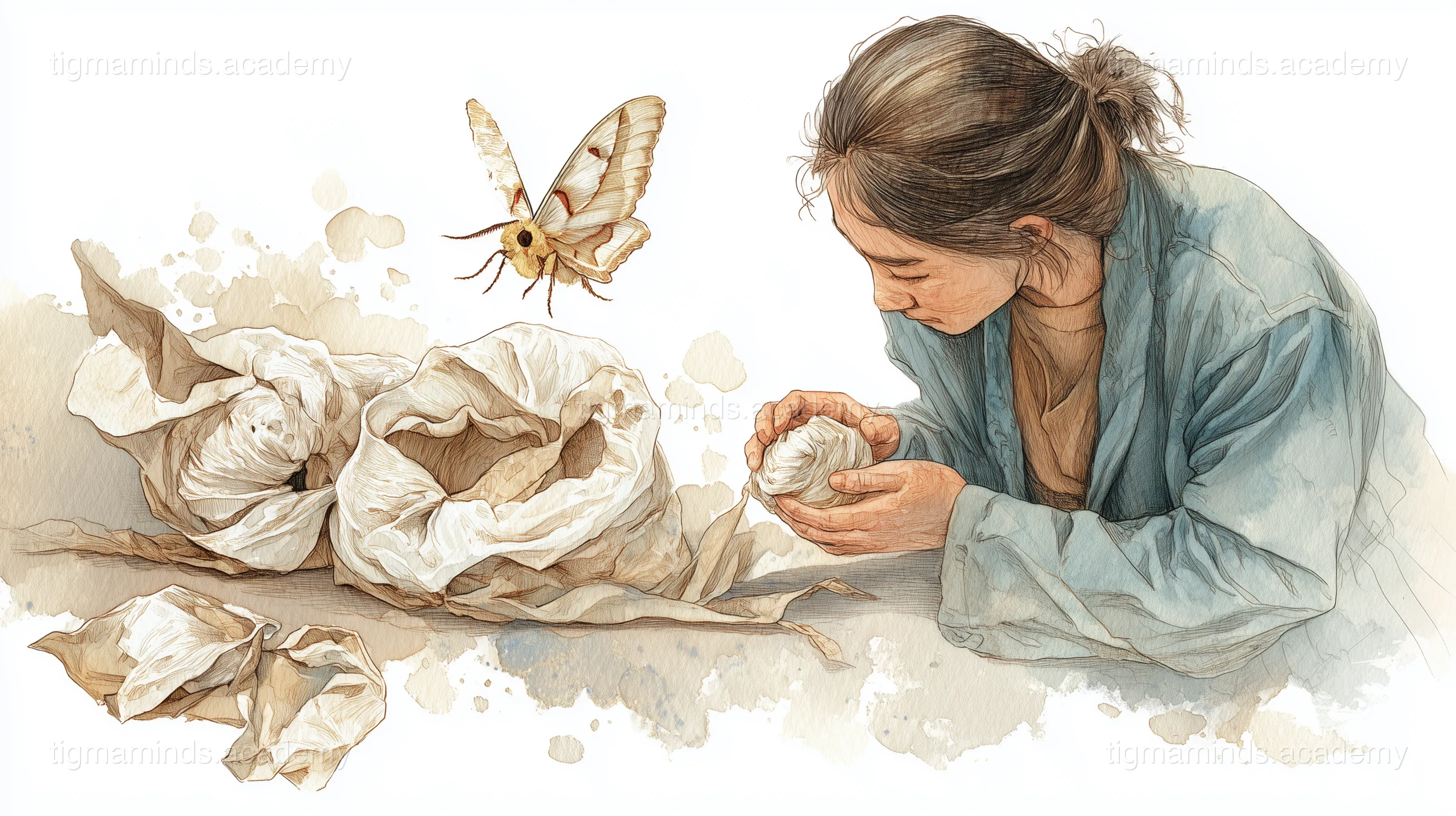
When she was ready, she pushed against the wall of the cocoon. Her new body produced a tiny drop of liquid that softened the silk, and she chewed a small hole and wriggled out into the light — damp, crumpled, and alive.

The Empty Gift

A woman named Jonali was tending the castor plants that morning. She saw Erima emerge, wet wings drying in the sun, and smiled. Gently, she picked up the empty cocoon — a small, white shell with a ragged hole where Erima had pushed through.

Jonali carried the cocoon to her spinning wheel along with dozens of others collected that week. She cut them open, washed the silk, and spun it into a rough, warm thread that felt like a whisper between her fingers. The thread wasn't smooth like mulberry silk. It was nubby, textured, full of character — eri silk, the fabric of Assam's conscience.

"Thank you, little moth," Jonali murmured as she worked the wheel.

The Moth's Flight

Erima dried her wings in the morning sun. They were cream-coloured with soft brown patterns, like a tiny watercolour painting. She was not a strong flier — eri moths rarely are — but she didn't need to go far. She fluttered to the nearest castor leaf, laid her eggs in a neat row, and rested.

Her children would eat, spin, transform, and emerge — just as she had. And the weavers would wait, just as they always had. No boiling water. No broken lives. Just patience, and thread, and a promise kept for generations.

Among the people of Assam, they say that eri silk is the warmest silk in the world. Perhaps that is because it carries no sorrow in its fibres — only the quiet warmth of a craft that chose kindness over convenience.

The end.

Try It Yourself

Choose your level. Everyone starts with the story — the code gets deeper as you go.

Story Progress

0%

Ready to Start Coding?

Here is a taste of what Level 1 looks like for this lesson:

Level 1: Explorer — Python
# Compare silk fiber properties
fibers = ["Eri Silk", "Mulberry Silk", "Polyester"]
warmth = [95, 40, 30]    # relative warmth score
strength = [60, 85, 90]  # tensile strength score
biodeg = [95, 90, 10]    # biodegradability score

import matplotlib.pyplot as plt
x = range(len(fibers))
plt.bar(x, warmth, label="Warmth")
plt.xticks(x, fibers)
plt.ylabel("Score")
plt.title("Which fiber is warmest?")
plt.show()  # Try adding strength and biodeg!

This is just the first of 6 coding exercises in Level 1. By Level 4, you will build: Compare Silk Fiber Properties Across Types.

By Level 4, enrolled students build: Compare Silk Fiber Properties Across Types

Free

Level 0: Listener

Stories, science concepts, diagrams, quizzes. No coding.

You are here

Enrolled

Levels 1-4

Python, NumPy, Matplotlib, real projects, mentorship.

Sign Up Free

Stay Updated

Join Waitlist

Get notified when enrollment opens for your area.

Notify Me

Level 0 is always free. Coding levels (1-4) are part of our 12-Month Curriculum.